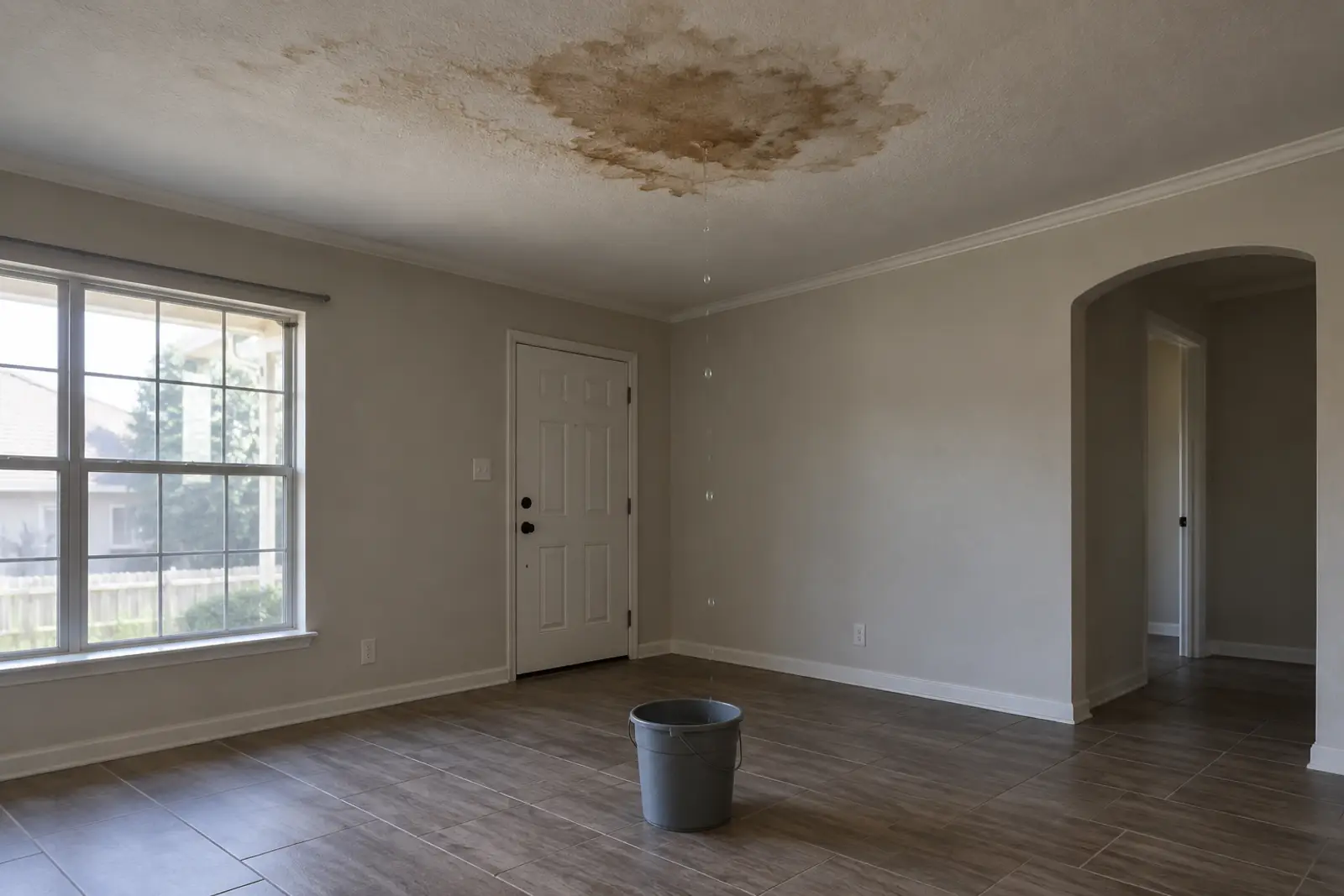
Water-stained ceiling dripping into a bucket

Ceiling water damage in Hurst, TX

A ceiling is where the water ended up, not where it started. The stain can tell you a fair amount about both.

Call (817) 989-2837

What the ceiling is telling you

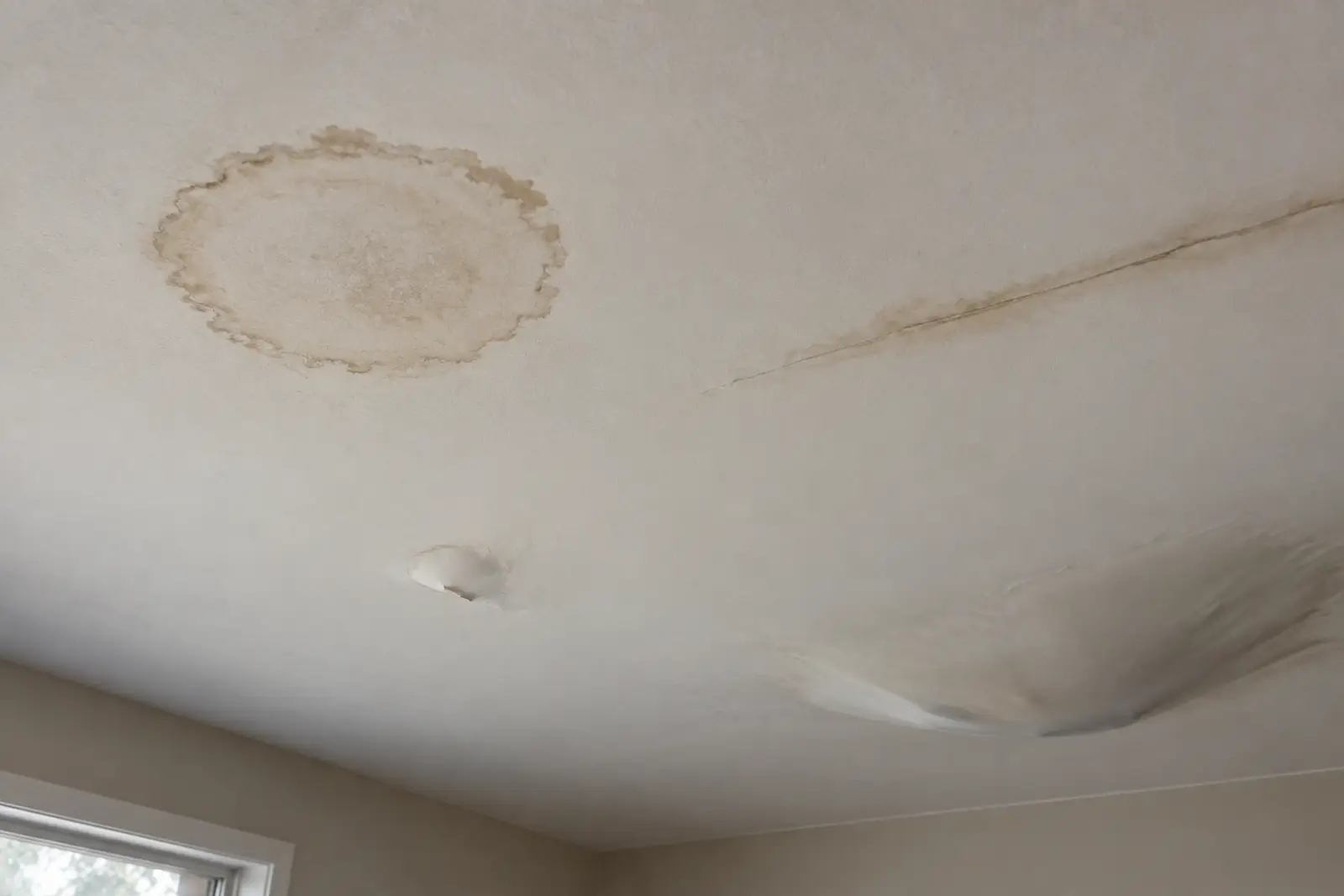
Water-stained ceiling showing a dried ring, a bubbled patch and a sagging section
  • Ring with a darker edge — The water has spread and partly dried at the margin. It's been going on for a while, or it's come and gone more than once.

  • Bubble in the paint — Water is sitting between the paint and the drywall. There's more behind it than the bubble suggests.

  • Stain running along a straight line — Water is traveling along a drywall seam or a joist before it shows. The source may be several feet away.

  • Sag or soft spot — The drywall is holding water and losing strength. Keep people out from under it; a ceiling full of water can come down.

Where it's coming from

If it started in rain or after a storm, the roof is the first suspect: lifted shingles, a damaged vent boot, flashing around a chimney or skylight.

If it's dry outside, look up and around: an attic water line, a water heater or HVAC drain pan in the attic, an upstairs bathroom or washer, or a supply line in the ceiling itself.

If it's in the garage, it's often a line or water heater in the attic space above, or the wall where the roof meets the house.

The source gets found and stopped before any drywall is patched. Patching first just gives the next leak somewhere to hide.

Storms in Hurst

North Texas spring storms bring hail and wind-driven rain, and both open roofs up. NOAA's storm records include hail an inch and a half across reported in Hurst on April 2, 2023.

Hail damage doesn't always leak straight away. A cracked shingle or a dented vent can let water in weeks later, in a rain that seems ordinary — which is why a ceiling stain in May can trace back to a storm in April.

Under a wet ceiling

Put a bucket under the drip and move furniture and anything valuable out of the way. If a spot is bulging, a small hole with a screwdriver at its lowest point lets the water drain into the bucket rather than bringing the section down — but only if you can reach it without standing directly underneath.

Leave light fixtures and ceiling fans in that area off. Water follows wiring.

The repair

Source first. Then the ceiling gets opened wherever the drywall is wet or sagging, and wet insulation above it comes out — it doesn't dry in place, and left there it holds water against the framing.

The cavity gets dried and checked with meters before anything closes up. Then new drywall, tape, texture and paint. Matching texture on an older ceiling is part of the job, not an afterthought.

FAQ

There's water leaking down from the attic. Is it the roof or a pipe?

If it started with rain, it's usually the roof. If it's dry outside, check for an attic water line, a water heater or an AC drain pan up there. Either way, turn off the water at the meter if you suspect a line, and keep out from under any sagging section.

The stain is old and dry. Do I still need to do anything?

It depends whether the source was ever fixed. A dry stain can be an old leak that's been repaired — or one that only shows up in heavy rain. A moisture reading tells you whether it's wet now; checking the roof or line above tells you whether it'll be wet again.

Hail hit last month and now there's a stain. Is that connected?

It can be. Hail can crack shingles or damage vents without leaking straight away, and the first leak shows up in a later rain. Photograph the stain and the roof, and talk to your insurer about the storm date.

Can you just paint over it?

Not until it's dry and the source is stopped. Paint over a wet ceiling traps the water and the stain bleeds back through. Stain-blocking primer only works on a ceiling that's already dry.

Ceiling dripping or sagging?

Call (817) 989-2837. Licensed and insured pros across Hurst, any hour. Free call, no obligation.

Call (817) 989-2837