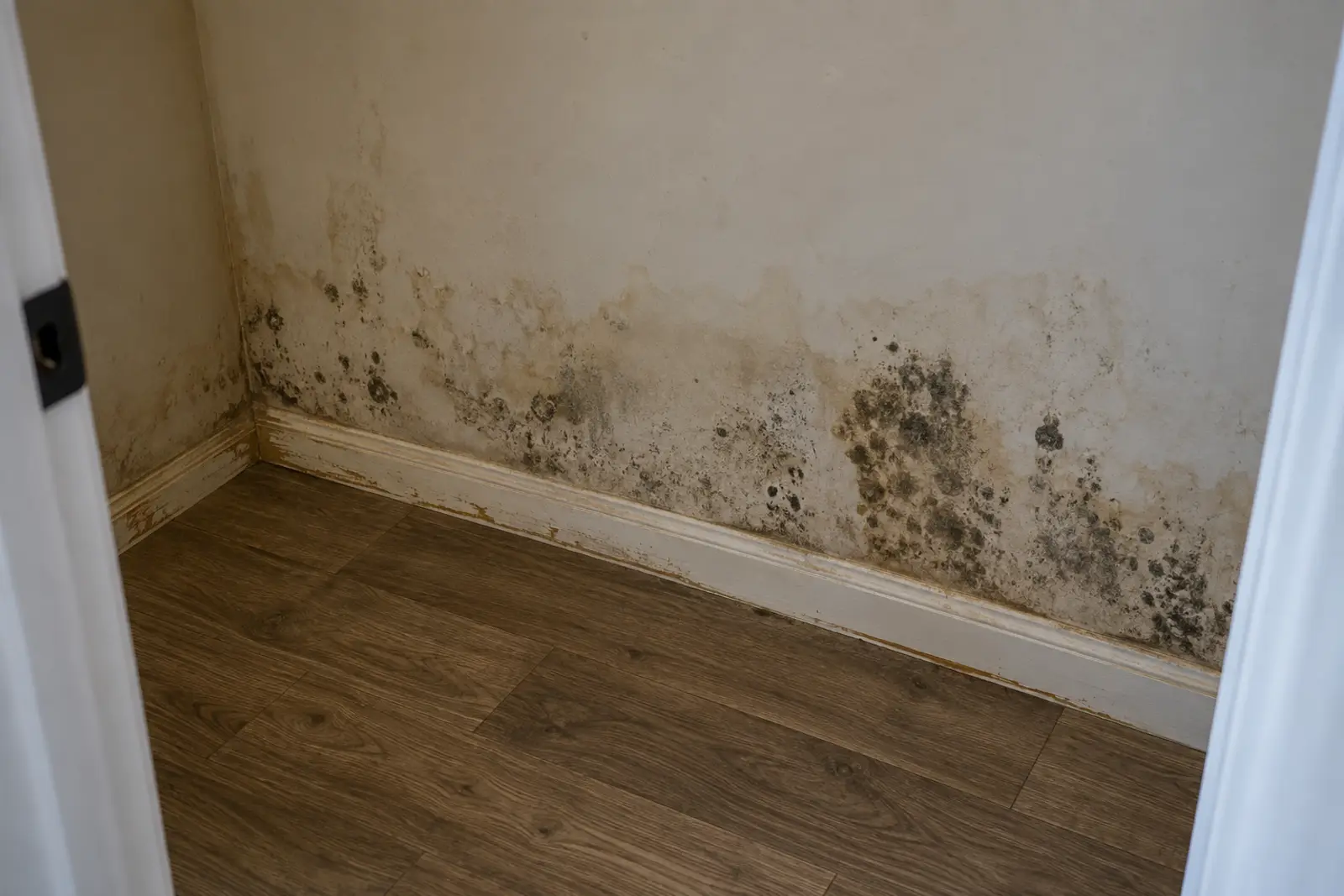
Mold growing on the lower part of a closet wall

Mold remediation in Hurst, TX

Mold is what water damage turns into when it isn't fully dried. Removing it only lasts if the moisture behind it is fixed too.

Call (817) 989-2837

Where it starts

Mold needs three things: a surface it can feed on, the right temperature, and moisture. Drywall paper, wood and carpet backing supply the first. A Texas house supplies the second most of the year. The moisture is the only part anyone controls.

So mold tends to show up where water was and nobody knew, or where it was mopped up but not dried: the back of a closet that shares a wall with a bathroom, under a sink cabinet, above a ceiling that leaked last spring, behind furniture pushed against an exterior wall, around an AC closet or air handler.

Texas licensing

Texas regulates mold work. The Texas Department of Licensing and Regulation licenses both the people who inspect and test for mold and the people who remove it.

For a homeowner, two points matter. You can clean mold in your own home yourself, without a license. But a company doing mold remediation for the public on an area of 25 contiguous square feet or more must hold a TDLR license. Licensed assessors and remediators are required to give you TDLR's Consumer Mold Information Sheet before any mold work starts.

When you're connected with a company for mold work, ask whether they hold a TDLR mold remediation license. You can check any license on TDLR's website.

What people get wrong about mold

Bleach kills mold, so bleach fixes it.

Bleach can lighten a stain on a hard surface, but on drywall or wood it doesn't reach what's growing inside the material. Federal guidance doesn't recommend bleach as a routine part of mold cleanup. The fix is removing affected porous material and drying what's left.

If I can't see it, it isn't there.

Mold often starts on the back of drywall or the underside of flooring, where the water sat longest. A musty smell in a room with no visible growth is worth taking seriously.

Paint over it and it's handled.

Paint seals the surface and hides the stain. The mold underneath keeps going as long as the material stays damp, and it comes back through.

Once it's cleaned, it's gone for good.

Only if the moisture source is fixed. Mold removed from a wall that's still getting wet will be back on the same wall.

What remediation involves

It starts with the water. If there's still a leak or damp feeding the growth, that gets found and stopped first.

Then containment: the affected area is sealed off with plastic sheeting, and air is filtered so spores disturbed during removal don't spread to the rest of the house. Mold-damaged porous material — drywall, insulation, carpet pad — is cut out and bagged. Hard surfaces and framing that can be saved are cleaned. The space is dried and checked with moisture meters before anything is rebuilt.

FAQ

There are a couple of mold spots on the wall. Do I need a company, or can I clean it myself?

For a small area on a hard surface, you can usually clean it yourself — gloves, a mask, soap and water, and dry it thoroughly afterward. If the spots are on drywall, keep coming back, or cover a larger area, the material likely needs to come out. And if you hire a company for an area of 25 contiguous square feet or more, Texas requires them to be licensed.

The inspector saw some mold but said not to worry. Should I?

It depends on whether the moisture that caused it is still there. Old, dry growth from a leak that's since been fixed is a different situation from growth that's still active. If the area is damp, smells musty, or the growth is spreading, get it looked at properly.

Should I get the mold tested?

Often it isn't necessary when mold is visible — it needs removing whatever type it is. Testing can help when you smell mold but can't find it, or when you need a record for a sale or a dispute. In Texas, mold assessment for hire is licensed work too.

How do I know it won't come back?

Ask what caused it and how that was fixed. A remediation that removed the mold but left the leak, the condensation or the poor drainage in place will be back. Moisture readings at the end of the job should show the area dry.

Found mold after a leak?

Call (817) 989-2837. Restoration pros across Hurst, any hour. Free call, no obligation.

Call (817) 989-2837